The Fence Row Revelations

The Life For Me

A farm is a wonderful place to grow up, and a wonderful place to live. There is always something to do, and plenty of space to roam. Counting my daughters, five generations of my family have lived on the farm that I call home.

One of my dad’s favorite maxims is that if someone says that he doesn’t have anything to do, then you know that he doesn’t own an electric fence. Few things on earth require more maintenance or looking after than an electric fence.

Keeping an eye on the state of the fence is a time-consuming job that can work up a sweat, so I recently began killing two birds with one stone by walking the perimeter fence of the farm, both to clear it of obstructions and to burn a few extra calories.

I have one rule going into this personal challenge: I try to stay as close to the perimeter fence as possible.

That is not as easy as it sounds.

13235084_1148322865219507_9155981255236740454_o
Sunrise.

The perimeter fence stretches about two-and-a-half miles around the farm. It goes through deep woods, makes a steep descent into a rocky crevice, runs past the dens of temperamental coyotes and through the natural habitat of a host of poisonous spiders, easily-startled serpents, and Tennessee’s official state dinosaur, the snapping turtle.

In addition to these natural obstacles, at two separate places I have to crawl beneath two interior barbed-wire electric fences in order to keep as close to the perimeter as possible.

The rough terrain gives me a much more challenging workout than my normal walk around the driveway. In fact, my average heart rate during a fence walk is 20-30 beats per minute higher than it is during my normal driveway walk.

And, perhaps more importantly, my walks along the fence row have shown me some truths.

Grow Through the Scars

In one of the wooded areas I pass on my fence row journey stands a grove of unusual trees.

They are all curiously bent toward the northeast, like a bow pulled taut and ready to loose. And yet they continue to grow.

These trees are survivors of adversity.

On May 18, 1995, an F-4 tornado damaged my home to such an extent that it had to be demolished a month later. It also bent those particular trees into an eternal arch.

Photo Jul 28, 3 18 26 PM
The trees have a story to tell.

For twenty years I’ve found inspiration in those trees. One moment in time bent them in such a way that you can still see it today. The trees, however, did not give up and die. They sprouted new branches from their crooked trunks, and they continue to reach for the sun, despite their deformities.

Recovering lost health has been much the same for me. I did not become a diabetic by genetic chance. I was not born with it. I created a storm of bad health by choosing to eat poorly and exercise rarely.

Storms leave us with choices. Do you keel over and let the storm define you? Or do you make the choice to live and continue growing despite what the winds have done?

I decided that I didn’t want the storm to define me, and I certainly don’t want it to end me.

But it’s a choice that must be made anew every day, with every meal you eat and with every moment you exercise. You determine the direction of your journey with each step you take.

Michael Scott said it best: “Don’t ever, ever, ever give up.”

The crooked trees in the woods near the fence row certainly haven’t given up, and neither should you.

If the Genes Fit, Wear Them

The Christening

On a spring day in 1751, 24-year-old Winifred Alley brought her child to the baptismal font to be christened in Bristol Parish, Virginia.

The event probably occurred in the still-new brick church on Well’s Hill, the highest point overlooking Petersburg. Winifred’s father served as sexton there.

Shadrick–or Shade, as the child was called–was born into a world where life was dangerous and brief. Tobacco was used as currency. Wolves still outnumbered people in much of North America. And Shadrick, true to his biblical namesake, lived a full and adventurous life.

Shade took up arms against the king in the spring of 1776. He served eight tours of duty for the patriot cause, and he was there when George Washington accepted the surrender of the British commander at Yorktown.

Shade was my 6x-great grandfather, and he saw 84 summers.

Shade’s signature on his Revolutionary War pension application.

A Legacy of Longevity

Genealogy has always been a passion of mine. But it took on new importance when I began taking care of my health.

You see, many of my ancestors lived very long lives. And I reached a point last summer where it appeared that my own life might be very brief.

I’m going to talk about my direct paternal Alley ancestors today; specifically, the men who gave me not only my last name, but also my Y-chromosome.

My grandfather Chester Alley lived to be 89.

My great-grandfather Charley Alley lived to be 93.

His father Clarence Alley lived to be 96.

His father Milas Alley, a veteran of the Civil War, lived to be 84.

Milas’s father Hamlin Alley and his grandfather Howell Lafayette Alley (who was Shade Alley’s son) both lived to be 80.

In fact, if you averaged the lifespans of the seven generations of male Alley ancestors from that spring day at the colonial baptismal font in 1751 to the day my grandfather Chester Alley passed away in 2012, the average age is 87.

That’s a lot of living in 261 years.

And did I mention that several of my great-grandfather’s siblings lived well into their nineties? And that his last surviving child, my great-aunt Cleda, turned 93 a few months ago?

I suppose you could say that the Alleys have a longevity gene.

But good genes are only part of the equation. My ancestors lived long lives as much because of the good choices they made as because of any good genes.

11261700_939444072774055_7909853551052234309_n
My great-grandfather Charley Alley when he was a young man.

Words of Wisdom

My great-grandfather Charley Alley used to say that you should always leave the table feeling a little bit hungry.

He was a slender, even-keeled fellow, in possession of good health and in command of his faculties until the end. He rarely lost his temper, and he usually went to bed around sunset or shortly thereafter.

He never went on a fad diet. He probably never read any motivational books aside from the Bible.

Charley didn’t learn his mealtime moderation from an Internet meme. That wisdom came from a lifetime of hard work and keen observation.

11249402_940243629360766_3448856831975743712_n
Me with my great-grandfather Charley Alley.

Changing Times

Life expectancy in the United States has declined in recent years, in what one recent Washington Post headline calls a “dismal trend not seen since World War I.”

Although an increase in drug overdoses and suicides have contributed to this trend, a major culprit remains obesity-related illness, the vast majority of which is preventable with proper diet and exercise habits.

Inheriting good genes is like getting a good job; how far you go with them depends almost entirely on the choices you make each day. The fact that I have inherited a 260-year longevity streak means nothing if I fuel my body with junk food and allow my muscles to atrophy from lack of use.

A Dip in the Gene Pool

Genetics is, of course, a very complex topic, and my own knowledge of it is cursory at best. I would hate for anyone to walk away from this post with the false assumption that determining how long one lives is as simple as determining how long one’s grandfather or great-grandfather lived. That is not the case at all.

Shade Alley’s genes, for example, may only comprise a fraction of my own genetic makeup. Like everyone else, I had 256 6x-great-grandparents. That number grows exponentially with each generation. We all have 4,096 10x-great-grandparents. At 18x-great-grandparents, the number goes past 1 million individuals.

The distribution of those genetic traits in my own body seems, by my feeble estimation, completely random.

What is not random, however, are the conscious choices I make each day regarding my own health and well-being. What I eat, how often and how much I exercise, and how much sleep I get will no doubt go a long way in increasing the number of years in my life.

But the joy I get from being able to play with my daughters and roam the woods and fields at leisure most definitely adds life to my years.

That is the kind of fullness I’ve found while trying to learn how to leave the table still a little bit hungry.

The Prize

The Contest

Have you ever won a contest?

I have.

On the last week of the seventh grade, I was late for school. It was one of only two or three times I can ever recall us being late for school.

My family disagrees about what put us behind schedule that day. But fate, as it turned out, intended for me to be late for school that morning.

That was one of the few mornings that I was still in the car when the local radio station we listened to on the way to school was playing trivia.

I love trivia games. Jeopardy! has long been one of my favorite TV shows. I dialed the number into my Mom’s bulky Zach Morris phone and waited with my finger on the button.

old phone
The phone, itself. I found it while cleaning not long ago. It is roughly the same size and weight as a brick. It was a simpler time.

The trivia question that morning was: “What is the length of a dollar bill?”

As the DJs spun Time is Tight by Booker T and the MGs, you could almost hear the sound of everyone in Lawrenceburg, Tennessee searching frantically for a ruler. As chance would have it, I knew the answer to that question by heart.

I pressed call, expecting to hear the busy signal. To my great surprise, local airwave legend Jack Cheatwood answered the phone and said, “WDXE trivia, can you tell us how long a dollar bill is?”

“Six inches,” I said.

“We have a winner!” he replied.

It was an exhilarating experience. I had never won a contest before. I didn’t even know what the prize was.

After school that afternoon, Mom drove me to the radio station and we found out. I won a huge family-sized ham from Big John’s Bar-B-Q and seven free rentals from a local video store.

Just in time for summer vacation, my trivia victory filled my imagination with visions of serene summer days filled with pork and VHS rentals. Victory was sweet.

The Victory

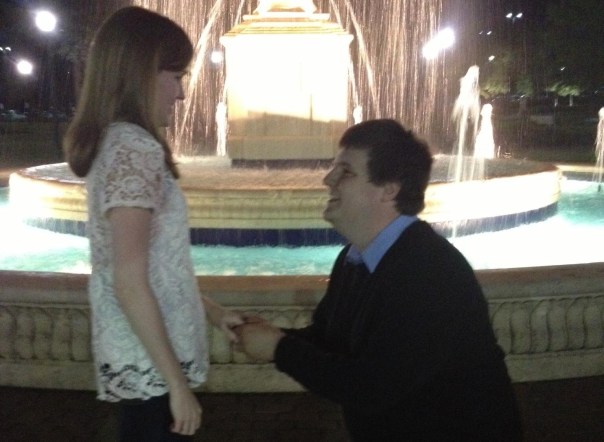
The day after I convinced Christy Lusk to marry me, one of our mutual friends told me that I had won the lottery. She was pretty, intelligent, and–above all–a devout Christian. He was right, but neither he nor I truly understood how right he was.

img_8210
I’m glad she said yes.

On the day we got engaged, I weighed a little more than 310 pounds. It was rare that I ate anything that didn’t come from either a deep-frier or a pizza oven. Over the next few years, my eating habits–and my weight–would get worse.

The destructiveness of my eating habits wasn’t clear to Christy until we had been married for a few weeks. As a physician, she knew that the way I was eating would eventually be fatal. But I didn’t listen to her. I ignored all of her nags, her pleas, her impassioned speeches. I responded to them all with an angry, “I wish you would just leave me alone.”

Until she realized one day that all she could do was pray for me. So she began praying for me in earnest, as my mom and grandmother had done for several years. Each day, multiple times a day, Christy took her case to God, pleading that He would change my heart and that I would change my ways.

By our fourth anniversary, we had built a house, begun new jobs, moved to my family farm, and had two babies–and I had added 100 pounds.

Still, she continued to pray.

She prayed as I ate unholy amounts of junk food.

She prayed as I fell asleep as soon as I came home.

She prayed as I no longer fit into clothes I had purchased a year before.

She prayed as I struggled to fit in the front seats of cars that we test-drove.

She prayed as she listened to my breathing stop for agonizing periods of time each night.

She prayed for me so often that my oldest daughter began to copy her. Among my daughter’s precious little-girl prayers for her dolls, her pets, and her Sunday school teachers, she would always include a word about “Daddy’s weight.”

22549774_1652672284784560_5356099148118765972_n
A few years and many pounds ago.


Living Faith

I wish I could say that my heart was so touched by all of this prayer that I immediately changed my ways. If I did, I would be a liar.

In fact, if you ever get the impression that I am in any way the hero in this story, then I am telling it wrong. Throughout my life, I have consistently been my own worst enemy at every turn. If anyone deserves hero status for pulling me out of the depths of my gluttonous depravity, it’s my wife.

Not only did she pray, but she put action behind her prayers.

When I nearly passed out at church one Sunday, I would have gladly ignored it, but she forcibly checked my A1C at home and made an appointment for me go to the doctor. When I found out that I had diabetes at that doctor’s appointment, and my own fear and ignorance of the condition overwhelmed me, Christy is the one who taught me how to check my blood sugar.

She is the one who told me that I would have to exercise daily. She is the one who patiently filled every pill box slot, cooked every meal, and packed every lunch I ate for nearly a year until I learned how to follow good dietary principles.

I have lost nearly half of myself, but in no world could I have ever done it without Christy. And, in no world have I ever been a good enough man to deserve a wife like her.

The Wounds of a Friend

At some point in your life, you have probably felt the urge to tell someone you love that you are worried about them and the decisions they are making. It is never easy to share an unpleasant truth, but I am certainly glad that Christy was honest with me about my eating habits. I was, quite literally, headed for an early grave.

If you love someone who is hurting themselves, speak up today. They will be glad you did.

As the Scriptures say in Proverbs 27:6, the wounds of a friend are faithful.

I can think of no better wounds than those which bring healing.

I can think of no better friend than the wife of my youth who brought me to that place of healing.

I enjoyed sharing that ham and those movie rentals with my family in middle school. And every day that I am able to breathe without struggling, move without hurting, and work without pausing is a day that I feel like I have won a mighty victory.

But all of that pales in comparison to the prize that is my Christy, the woman who loved me too much to leave me alone.

Three Ways to Measure Weight-Loss Success When the Scales Won’t Budge

You’ve eaten right. You’ve exercised regularly. You are doing everything you’re supposed to do.

And yet, the scales have stalled. Your weight-loss seems to be curtailed. Your frustrations mount with each passing day.

I feel your pain. The struggle is real.

Sometimes, despite doing everything just as we are supposed to, the number on the scale refuses to go any lower. These are what diet experts call ‘plateaus,’ and they can be confidence-shattering.

But they don’t have to be.

Use plateaus as a time to re-evaluate your activity level and caloric intake. You may need to adjust your diet or the intensity of your exercise routine as your body’s needs change. Ask your doctor or nutritionist for specifics. Tell them Clint sent you.

But one thing you absolutely don’t need to do is get discouraged!

Here are three ways you can measure your fitness progress when the number on the scale seems to be taunting you.

1. Count Your Hangers

Losing a huge amount of weight is life-altering. It is also closet-altering.

I recently purged my closet of any shirt larger than a 2-XL. It was the fourth such purge since I began losing weight last summer. At that time, I was in a 5-XL. I have shrunk three shirt sizes, making my closet one of the busiest rooms in my house in the past year.

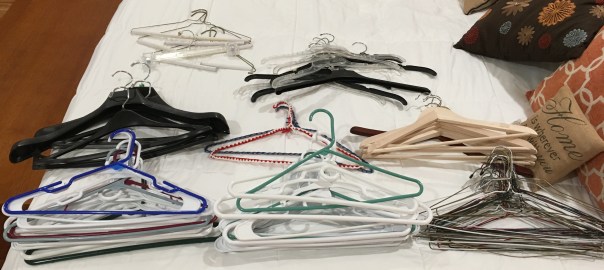
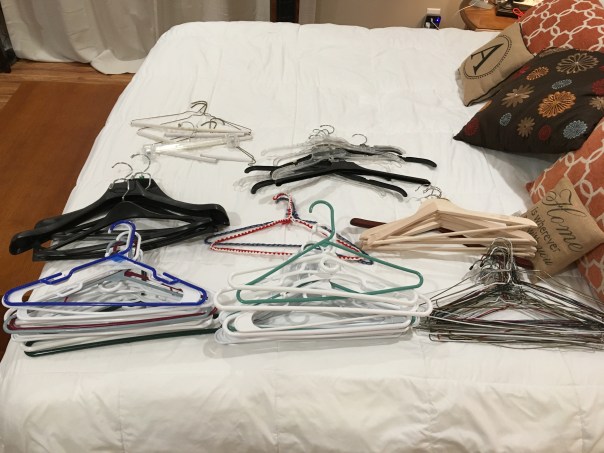
As I weeded my wardrobe, I removed the larger shirts and coats from their hangers and tossed the garments into plastic bags. I stacked the hangers absentmindedly on my bed.

When the dust finally settled and the smoke cleared, I had 91 empty hangers before me.

Holy cow! Ninety-one hangers! That’s a lot of giant clothes that I will never fit into again.

That morning, the scale had mocked me. But the closet’s message was loud and clear:

What you’re doing is working! Keep at it!

Photo Mar 04, 6 22 59 PM
The proof is in the hangers.

2.  Check Your Measurements

When I was first diagnosed with diabetes, my waist was 54 inches around. The belt I wore was custom-made, and was over five feet long.

My belt was almost the same height as my wife.

Today, my waist is 38 inches and shrinking. I’m still wearing that same belt, but I’ve had to drill almost a dozen new holes in it. Each of those new holes is a literal notch on my belt for weight loss; a reminder of how hard I have fought to get in shape.

Weight loss is not just measured in pounds; it is also measured in inches.

Even if the number on the scale has plateaued, your body may still be shedding inches. Keep track of your measurements, and don’t lose heart.

3.  Walk a Mile in Your Own Shoes

You’re keeping track of your exercise aren’t you? Either in miles traveled, minutes spent sweating, or total calories burned, keep track of it all in some form.

And when you start to feel discouraged, tally it all up!

By walking three miles a day since I was diagnosed with diabetes, I estimate that I have walked more than 1,050 miles as of this evening. That’s like walking from Washington, DC to New Orleans!

If you haven’t kept track of distance, total up the time you’ve spent exercising. How many times could you have watched your favorite movie in those hours?

More importantly, how many hours do you think you’ve added to your life for every hour you’ve spent exercising?

A recent study postulated that one hour of running per day could add up to seven hours to your life. Get moving, and remember your motivation!

Don’t let the scale get you down. Take steps to break that plateau, but also remember how far you’ve come!

I want to see pictures of those empty hangers in your closet!

Isn’t it Expensive to Eat Right?

The Cheeseburger Equation

A few months after I finished grad school, I passed a fast food marquee advertising something that I found too tempting to pass up: 50-cent cheeseburgers.

When I got back to my apartment, I found the number for the restaurant and called with a simple question:

“Does that discount apply to bulk orders?”

Two hours later, I returned to the restaurant and purchased a box–yes an entire box, roughly the size of a standard case of copier paper–of cheeseburgers.

For myself.

I had what I thought was an ingenious plan. I purchased 100 complete, ready-to-eat cheeseburgers that day. I was going to freeze them, then thaw one per day in my toaster oven and eat it for lunch for the next 100 days, and thereby save myself a ton of money.

Among my friends, I am and have always been a well-known skinflint. My battle cry is, “Never pay list price.” Some may say that my money-hoarding ways come close to making me a miser, but I prefer to say that I am parsimonious. It sounds better, and fewer people know what it means.

My cheeseburger plan didn’t work out quite like I had planned. Aside from the obvious negative health effects that result from eating cheeseburgers every day for more than three months, the quality of those burgers went downhill fast after I put them in my freezer. And it only got worse the closer I came to the bottom of that box.

I think I wound up throwing away more than two dozen of those frozen cheeseburgers. They were pretty nasty by the end.

For most of my twenties and thirties, I leaned heavily on the excuse that it was okay to eat 50-cent cheeseburgers, $5 pizzas, $7 buffets, and $8 value meals–and to eat them often–because they were all cheap.

True, I would say to myself, usually as I stuffed my face, this deliciously deadly food, eaten in unholy quantities, isn’t good for me, but in the end I’m saving money, and who can afford to eat all of that healthy food, anyway?

18954947_1520250794693377_622519215164311785_o_1520250794693377
A dollar bill I found once. Why so serious?

The Price of Poor Choices

As it turned out, I was extremely wrong. Most bad-for-you food is cheap in the short-term, but if your life is a never-ending revolving door of one frozen pizza and deep-fried value meal after another as mine used to be, the bill will eventually come due.

The price of poor eating habits is your health, and it is measured in years taken from you instead of dollars spent.

True, a bucket of fried chicken is cheap. And it is delicious. But if you take all of the savings you have from 40 years worth of chicken buckets, how do those savings stack up against medical tests, surgeries, recuperation days, and the endless health problems that can be attributed to a poor diet?

For me, the question was a simple one: is one day less with my wife and daughters worth any amount of money?

Of course not!

Whatever the cost of eating healthy, it is ultimately cheaper than the cost you will pay for eating poorly. As Ann Wigmore said, “The food you eat can be either the safest and most powerful form of medicine or the slowest form of poison.”

But the good news is that you don’t have to break the bank to eat right.

Saving Money and Adding Years

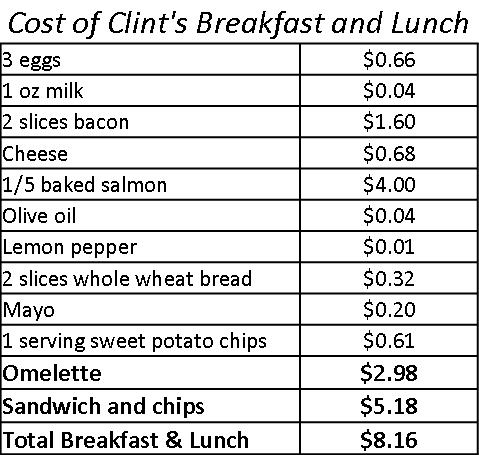
As you may recall from previous posts, I eat pretty much the same thing for breakfast and lunch every day. An omelette for breakfast, and a salmon sandwich for lunch.

I broke down those meals ingredient-by-ingredient with actual costs from my local grocery store. The combined cost for my usual breakfast and lunch is a little over $8 per day.

That’s it.

I went from spending more than $10 a day for lunch alone to spending less than $10 a day on food that I bring from home for 2/3 of my daily meals.

Picture1

It has been my experience that saving money and losing weight both follow a set of similar rudimentary principles. Those principles are:

  1. Planning ahead
  2. Time management
  3. Impulse control

Saving money and losing weight are both exercises in self-discipline and self-control, two areas where I have always struggled.

The great financial planning guru Dave Ramsey is famous for saying that the definition of maturity is the ability to successfully delay gratification; to focus on what you want most instead of on what you want now.

That is as true for food as it is for money. I have always known that eating too much was bad for my health. But I didn’t succeed at losing weight until, with a great deal of help from my sweet wife, I began to control my desire for food and stopped allowing my desire for food to control me.

Making Time

Saving money depends heavily on sticking to a budget. If you name each dollar and stick to your plan for it, you have taken an important first step in controlling your finances. Losing weight is no different.

Just as you know that certain bills will be due each month, you know that you will probably eat three meals each day. If you put no thought ahead of time into what you will eat for those meals, you will probably make poor diet choices out of haste, just as you may come up short on your bills if you allow them to surprise you every month.

You’re probably going to eat 1,095 meals in a year. You know this now, at this very moment. Take a little time now and plan ahead. Making your lunch the night before is a simple time management habit that can make a huge difference in both your waistline and your budget.

Make time to plan your meals. Make time to exercise each day. Make time to fix your lunch ahead of time.

Make time for your health.

When it comes to your weight, an ounce of prevention is worth a hundred pounds of cure.

Thinner Than I Deserve

It’s not surprising that I gained a great deal of weight during my frozen cheeseburger phase. In fact, that summer, I went above 300 pounds for the first time in my life, and I didn’t see the other side of 300 again for ten years.

I thought that stocking up on cheeseburgers was a good idea. Outwardly, it had all of the hallmarks of a sound financial decision. I took advantage of a limited opportunity. I bought when the price was low. I made plans to maximize the benefit at a greatly-reduced cost.

But the one thing I didn’t take into account when I bought a case of cheeseburgers was my own health and well-being, and I paid the price for it in a rapidly-expanding waistline. My cheeseburger experiment opened the door to a host of other foolish food decisions over the next decade.

Those cheeseburgers wound up being a terrible investment, but they taught me that the best investments aren’t always about adding money to your wallet.

On Being Planted

How To Get Rid of a Pumpkin

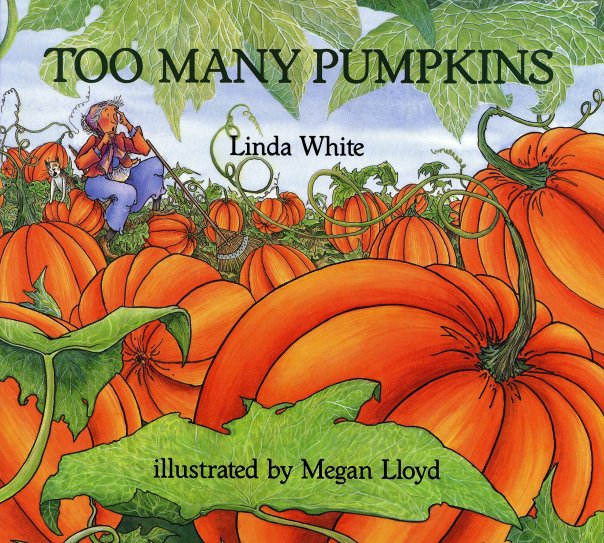
One of my favorite books to read with my girls is called Too Many Pumpkins by Linda White, illustrated by Megan Lloyd.

It’s a book about a woman named Rebecca Estelle, whose complicated past with pumpkins leads her to despise them, until one tumbles from a truck and smashes to pieces in her front yard.

Rebecca decides that she will bury the remains of the pumpkin in order to get it out of sight. The only problem is that, by burying the pumpkin, Rebecca succeeds only in planting its seeds, and by springtime her yard is all but taken over by new pumpkin vines. When she tries chopping up the vines, all she does is prune the plant and make it produce even more pumpkins.

By the end of the book, Rebecca realizes that she has misjudged pumpkins, and she comes to love them. Don’t you love a happy ending?

B1qNoFZCCVS.jpg This is really a great read. It’s pumpkin-tastic.

Rebecca Estelle’s mistake was that she saw burial as a means of disposal.

For most living things, burial is the end.

For a seed, however, burial is only the beginning.

Putting Down Roots

I have never been especially self-conscious about my weight. Even when I tipped the scales at more than 400 pounds and could no longer fit in standard theater seats–or, come to think of it, regular-sized chairs of any kind–I didn’t see myself as less of a person due to my weight. And neither should you.

I know that many people snickered about my weight behind my back when I was at my heaviest. But that thought still doesn’t make me angry. In fact, I would probably have laughed along with them at the time.

It’s not that I possess a superhuman forgiveness gene. I simply do not care about what other people think of me. I never have. How I am perceived by others has never played that big of a role in my own sense of self-worth.

But, myself aside, I understand that jokes aimed at overweight people have the potential to cause a great deal of damage. I know some people who carry deep scars from a lifetime of unkind words about their weight.

Let Your Vines Grow

If you still feel the sting of harsh words about your weight years after they were spoken, I would like to challenge you today.

Those words, those insults, those derisive laughs were all intended to bury you. Those who spoke them thought to marginalize you, to discard you, to make you of little consequence due to your weight.
But you are like Rebecca Estelle’s pumpkins.

Those unkind people weren’t burying you, you were being planted, because they had no clue what you are made of.

You are worthy of love.

You are worthy of kindness.

You are worthy of respect.

If you are eating yourself to death as I was, then you need to change your lifestyle. Make your health a priority. Take care of your body, and start today.

But don’t ever, under any circumstances, let anyone make you believe that you are less of a person due to your weight.

Instead, use the dirt thrown at you by others to plant yourself. In time, you will fill their yard with your vines.

IMG_7214
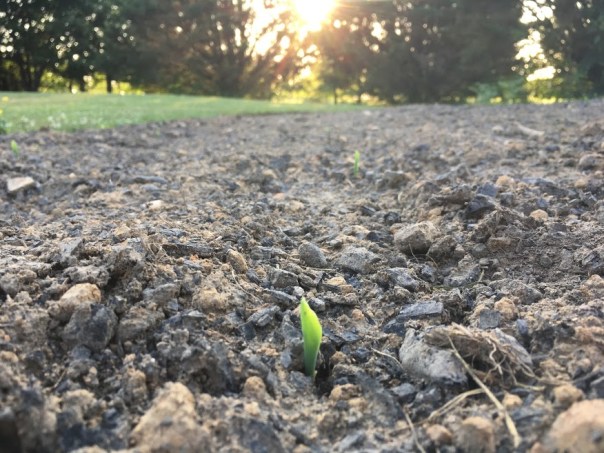
“First the blade, and then the ear…”

The One Thing That Helped Me Step Up My Exercise Game and Lose Half of Myself

Chasing Cheeseburgers

The last time I joined a gym will probably be the last time I ever join one.

Like everyone who joins a gym, my intentions were good. I knew I needed to lose weight, and what better place to focus on physical fitness than at a place full of exercise equipment?

The results, I’m afraid to say, were disappointing. I went every day for a couple of weeks. And then I missed a day or two on the third week.

By the fifth week, I was going only once or twice after work, and I always watched cooking shows on the treadmill. To the amused onlooker, I was a fat man breathlessly chasing a screen full of cheeseburgers.

Six weeks in, I was going to the gym once a week and then stopping by the drive-thru window for milkshakes on the way home.

My lack of self-discipline made my well-intentioned gym membership as useful as a glass hammer.

The Missing Piece

When I got serious about losing weight due to my diagnosis with Type 2 diabetes, I knew I was going to have to do something different.

If I wanted to avoid the awful possibilities that uncontrolled diabetes brings with it, I had to make movement a daily priority. It was no longer optional.

One thing got me motivated and has helped me stay motivated.

It wasn’t my smart watch.

It wasn’t a playlist.

It wasn’t a screenful of cheeseburgers.

The one thing I added to my exercise routine that has kept me on track is a friend.

Like Father, Like Son

Having an accountability partner has made all the difference to my exercise habits.

I walk with my dad every day, in rain, in sun, beneath a cloud of locusts, whatever may come. Despite what falls from the sky or what temperature it is outside, we take an hour and walk our daily three miles.

clint and dad
Dad and me at the birthplace of Colonel David Crockett.

When I first began walking, I struggled. After half an hour of walking around my parents’ driveway, my 400-pound body was soaked with sweat, I was seeing stars, every joint was aching, and I thought I was going to pass out.

Dad came outside and joined me. He was concerned enough about my physical state that night that he walked me home to make sure I didn’t die in the woods.

We are neighbors, so the commute wasn’t that far.

He came out the next night, too.

Together we made a pact, that we would walk with each other every night, no matter the weather or time of year.

It’s a pact that, coupled with healthier eating habits, saved my life.

It’s been nearly a year and we haven’t missed many nights. I will admit that we did call it early one night because of a tornado warning. But I no longer call it quits because I’m tired or because I’ve had a bad day, and you can forget going on a milkshake run afterwards.

Having an accountability partner means that showing up to exercise is also keeping an appointment. And the results have been incredible.

Not only have I lost 180 pounds, but Dad, a veteran runner, says that the nightly walks have helped to improve his time in races.

Labor Day 09 052
Dad running a 5K in 2009.


What Made the Difference?

Having an accountability partner has completely changed the nature of exercise for me. Instead of relying on my own willpower to get me to the gym, I know that I will spend an hour each night laughing and talking with my dad. Plus, if I miss our nightly walk, he will track me down and ask me why.

Not only have we walked more than 1,000 miles together in the past year, but I get the benefit of learning from his wisdom and experience about every facet of life, and we also exchange funny stories.

Chasing cheeseburgers at the gym got old really fast. But spending time with my dad is worth every moment.

It’s a friendship that quite literally saved my life.

11535865_957401747644954_6563429973423239582_n
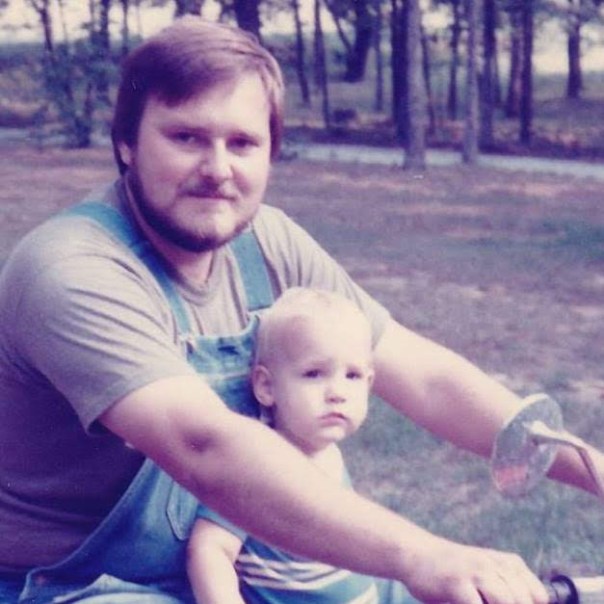
Buddies from way back.

How I Grilled My Way to Losing 180 Pounds: Menu for Success Part 4

Note: This post is the fourth of a four-part series, and it includes Amazon links to different foods and food-related products that have helped me lose weight. Ordering from these links helps to support this page.

Two Larges, Too Large

“Yes, I’d like to order two large pizzas, please.”

It was Friday night, and I was leaving work with cell phone to ear. That meant it was time for a sacred and familiar weekend ritual that most American families will recognize.

The ordering of the pizzas.

On most Friday nights when I was morbidly obese, I ordered two large pizzas to go, and picked them up on my way home from work.

Two large pizzas is probably a normal amount of pizza for a family of four. The only problem with my order is that one pizza was for my wife and two children, and the other pizza was entirely for me.

And I normally ate most of my pizza in the car on my way home.

Some friends in college snapped this shot of me cultivating my pizza-eating skills.

Eating entire large pizzas for dinner was a practice that I developed in college. I never experimented with drugs and alcohol in college, but once I realized that I could eat pizza whenever I wanted, I was like a kid who figured out how to start the engine of a tank.

Add to that the fact that you can get most large pizzas for less than $10, and I ate some truly awful things in the fifteen years between entering college and my diagnosis with diabetes.

The kind of pizza I usually got contained more than 3,000 total calories. And at nearly 300 total grams of carbs and sugars, I would have consumed fewer sugars if I had eaten 4 pints of chocolate ice cream.

I shudder to think of the effect that this gluttonous habit no doubt had on my blood sugar.

The Special Meal

Dinner is a special time for me. It’s the only meal that I regularly eat with my family every day. If I ever eat for a special occasion, it is usually at dinnertime. And on the extremely rare occasions that I have company over, it is usually for dinner.

I once used dinnertime as an excuse to indulge in a gluttonous splurge of Henritian proportions. But my attitude about dinner changed when I realized that I had to get my weight under control or face an early grave.

I’ve found that the key to eating a healthy dinner is the same as eating healthy at any other meal: balancing carbs, sugars, and proteins.

My golden mean for each meal is 45-60 combined grams of carbs and sugars per meal. And my secret weapon for achieving that at dinnertime is grilling.

Getting Up In Your Grill

I am relatively new to the world of grilling. I grew up watching my dad grill, but I didn’t own my own grill until I got married six years ago. My first was a charcoal grill.

A heftier Clint with his first grill.

I produced delicious food with the charcoal grill, and I love setting things on fire, but I quickly grew tired of having such little control over the temperature. It would sometimes take me more than an hour to get the fire going, and I am far too impatient for that.

So my second grill was a cheap propane rig. It was fantastic. Since that day, I have grilled constantly, and I grill exclusively with propane, just as Hank Hill would want.

On average, I grill something for dinner at least two or three nights a week. Rain or shine, freezing cold or burning hot, I grill in all conditions.

I have grilled when the temperature was in single digits. I have grilled during tornado warnings. I have grilled during flash floods. I have even grilled in the snow.

Grilling has been a way of life in the Alley house for several years. So when I began eating right, I already had experience in cooking meat that was both delicious and healthy.

I Have the Meats

When I first learned that I had diabetes, my doctor recommended that I eat sirloins. Compared to other cuts, sirloins are a relatively healthy, lean cut of meat. My wife prefers New York strips.

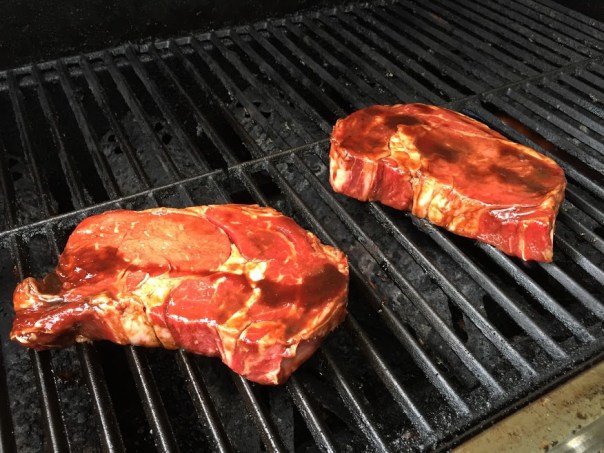
But for my money, it doesn’t get much better than a fresh ribeye. I pour a dab of low-sodium Dale’s on the steak, spread it evenly on both sides, then cook it for 8-10 minutes on each side in a closed grill that has been heated to about 500°.

I also grill a lot of boneless, skinless chicken breasts. I butterfly them, coat them with a splash of Dale’s, and cook them for about 10 minutes on each side. I have also grilled bison, lamb, and shark meat with varying degrees of success.

I’ll be honest; the shark meat was not that great.

IMG_1335
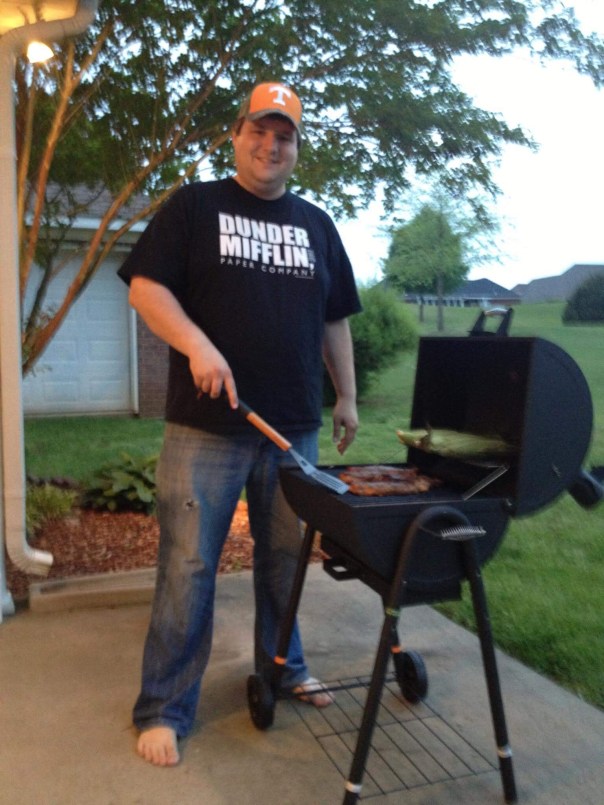
A little beef on the Barbie.

The Sides

I eat pretty much the same thing for breakfast and lunch every day. But I try to never eat the same thing for dinner two nights in a row or more than twice in a week if I can help it.

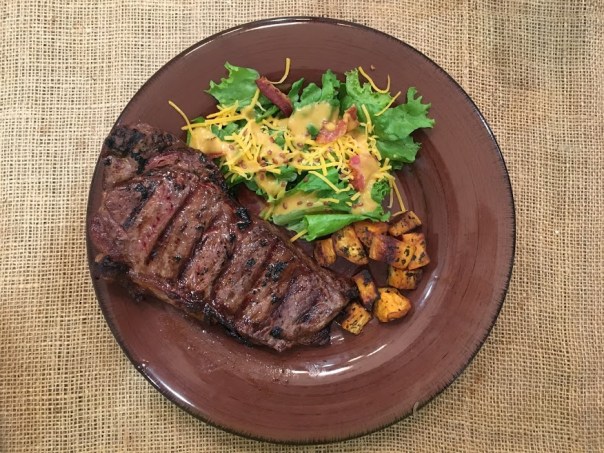
That being said, probably the most common dinner for me consists of a grilled meat lightly marinated in low-sodium Dale’s sauce with a green-leaf lettuce salad and a baked sweet potato or sautéed sweet potato bites.

The salad is dressed with a small amount of honey mustard, a dab of shredded sharp cheddar cheese, three or four croutons, and flax seeds. The baked sweet potato has butter, cinnamon, salt and pepper.

The sautéed sweet potato bites are truly delicious. To make them, peel a sweet potato and cut it into cubes, then pan-cook the cubes in olive oil with dashes of cinnamon and parsley in a skillet. They taste great and have a subtle crunch reminiscent of hash browns. You can also cook unpeeled red potatoes in this manner by replacing the cinnamon with garlic powder and basil.

In the summer months, I also eat the occasional ear of fresh corn. Corn is high in carbohydrates, so I try to limit my corn intake to just once or twice a week.

The corn on the cob I eat is always grilled. I pull it from my garden, shuck it, rinse it, salt and pepper it, coat it with a drizzle of microwave-melted butter, and then wrap it in aluminum foil. Sometimes I also add cayenne pepper.

I leave the foiled cobs on the grill for the entire cooking time of whatever meat I’m cooking, rotating the cobs when I flip the meat. The result is mouth-watering.

Simply Nutritious

This simple dinner is easy to make, relatively inexpensive, and–together with portion control, impulse control, and daily exercise–has been one of the cornerstones of my weight loss.

IMG_1436
Beef. It really is what’s for dinner.

The Face of Extreme Weight Loss: My Before and After Gallery

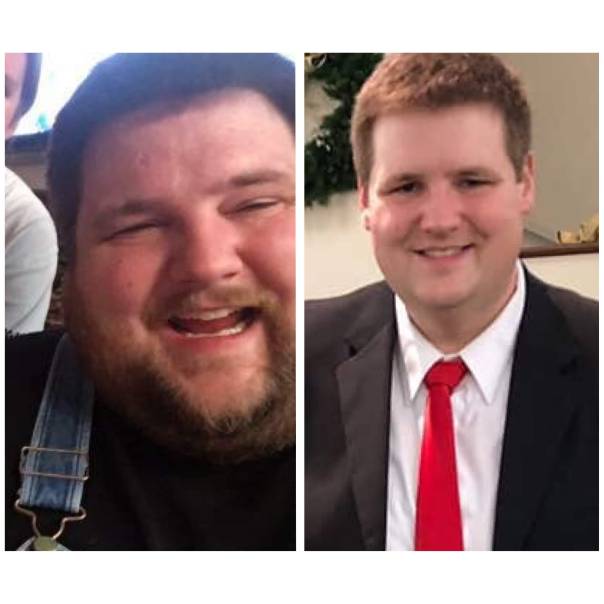
Over the past year, I have lost 180 pounds. What does it look like to lose half of yourself? Take a look at these before and after photos from my weight loss journey and see.

IMG_2997

The guy on the left was me at my daughter’s birthday party in 2017. The guy on the right is me at the same birthday party in 2018. I’m looking forward to many more birthday parties with my girls.

IMG_5141
Me with my family at church in April 2018 and at a wedding in April 2019. Going to church has changed in that I now take up a lot less pew space. But also, my attitude about sacred places has changed. I would never trash the church building because I have too much respect for it as a place of worship. I have come to understand that how I treat my body as God’s temple is just as important as treating God’s house with respect.
IMG_3383
Me on New Year’s Day 2018 and at Christmas 2018. I decided to start monitoring my weight in December 2017. The first time I stepped on my scale that month, it showed an error message. I weighed more than the standard bathroom scale could measure, and I had to order a new one. Can anyone say ‘Red flag?’
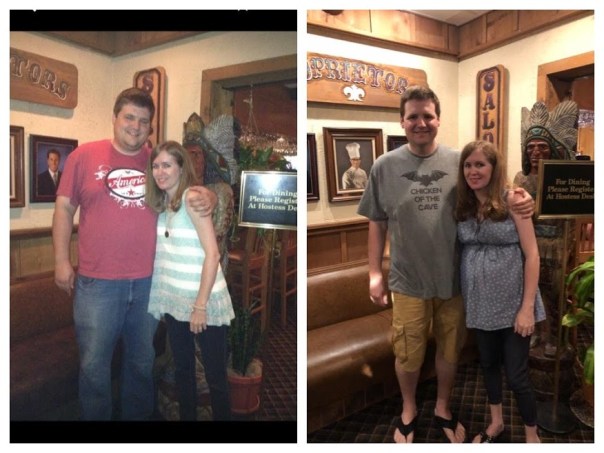
A before and after from our honeymoon. We are sitting in the same booth of the same restaurant, six years apart. We normally don’t sit on the same SIDE of the booth; we moved there for the purposes of the photo. That has no bearing on my weight loss, but is important to me that you know that.
IMG_6463
The same honeymoon restaurant. Absolutely nothing had changed at the restaurant, except that I ate a lot less this time.
IMG_5997

Each year I participate in the reenactment of a Prohibition-era raid on a moonshine still at a park in northern Alabama. At the left was me at the 2018 raid, on the right is me at the 2019 raid. My weight has gone down, and my historical authenticity has gone up.

Another honeymoon before and after at the Back Porch. When we married, I weighed 300 pounds. By our fifth anniversary, I had gained more than 100 pounds. Today, I weigh 70 pounds less than I did on our wedding day.
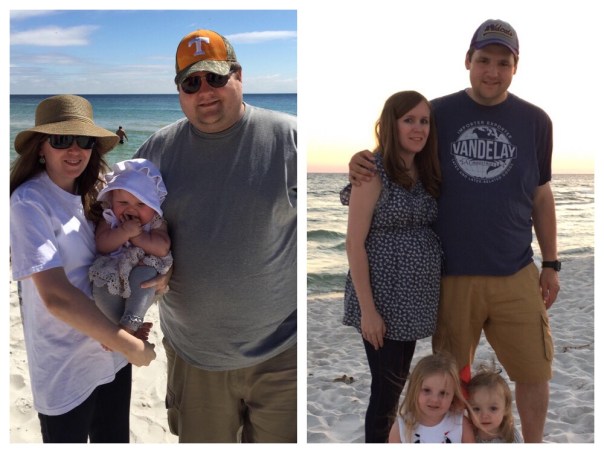
A day at the beach in 2015 vs. a day at the beach in 2019. I didn’t really like going to the beach when I was obese. It’s hot, and every activity involves physical exertion. But the beach took on a new meaning on my most recent vacation. Not only was I able to play with my kids and swim in the ocean, but I walked three miles along the coast every day. Losing weight has given me the freedom to enjoy the world as I never have before.
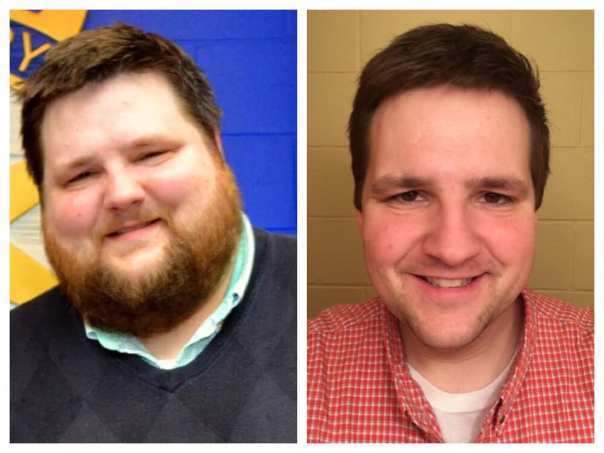
Photo May 15, 11 36 39 PM

Dining out in 2016, and again in 2018. Dining out has changed, both in how often we do it and in how much I eat when we do, but I have come to realize that it’s not what’s on the table that matters as much as who is sitting around the table with you.

52816663_2277248428993606_3050493950684037120_n
Spring 2018 vs. Spring 2019. The people have demanded that I bring back the beard. However, Mrs. Alley has demanded that I not.
Photo May 15, 11 41 07 PM
Mr. and Mrs. Alley, 2017 vs. 2019. She saved my life.


How Pork Rinds at Snack Time Helped Me Lose 180 Pounds: Menu for Success Part 3

Note: This post is the third of a four-part series, and it includes Amazon links to different foods and food-related products that have helped me lose weight. Ordering from these links helps to support this page.

Emotional Eating

A few years and nearly 200 pounds ago, I was turned down for a job that I really wanted. I was one of the top three candidates, and I was excited about the job. But then I got the rejection call. They gave the job to someone else.

In my anguish, I went to the window of a donut chain, ordered two-dozen hot, fresh chocolate glazed donuts, ate every single one of them in an hour, and then washed them all down with a chilled Code Red Mountain Dew.

That’s what snacktime used to look like for me. A gallery of empty calories and saturated fats. I guzzled Code Red Mountain Dews like they were the fountain of youth. My daily Mountain Dew habit this time last year had me drinking more than 700 grams of sugar per day.

That’s over a pound of sugar a day in soft drinks alone.

Add to that two or three chocolate bars, a couple of fast food corn dogs for the road after work, and a large milkshake whenever I felt like it, and that will give you some sense of how I almost ate myself to death.

Is it really any wonder that my blood sugar was in the 320s the first time I checked it?

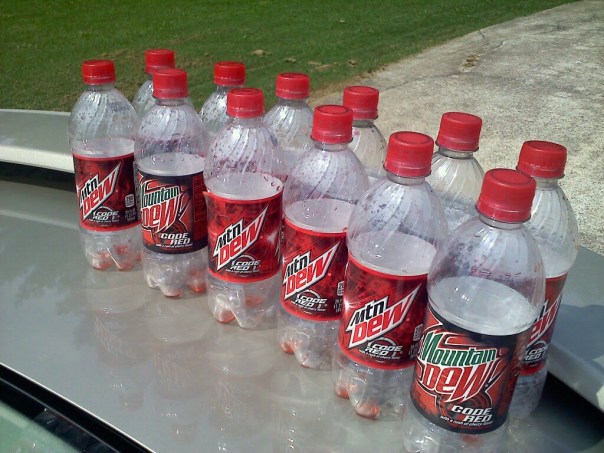
A few days’ worth of Mountain Dew bottles taken from my car when I was in the depths of my Dew-pravity.

Feeling Good All The Time?

When I was at my most dangerous weight, my snacking was reckless. It was fueled completely by emotion. I ate between meals because it made me feel happy. It gave me something to look forward to.

And it was worse on days that I felt sad or anxious or depressed. Even now, 180 pounds down, the days when I overdo it are usually days when I feel down about something.

Emotional eating is real, and it can be just as dangerous as emotional drinking or emotional spending. And overcoming it has been one of the hardest parts of cleaning up my diet.

When I was diagnosed with diabetes and realized that the only option was to lose weight, snack time became very difficult for me. I had wrapped snack time in a mummy-like cocoon of emotion for many years, and it was not easy to unravel.

Fortunately, my sweet wife had the solution.

The Unlikely Secret Weapon

Snacks can actually be very good for you. Eating a healthy snack after breakfast and another before dinner can help boost your metabolism.

My golden mean is 15-20 carbs per snack. To reach this goal, my wife began packing two snacks in my lunch box, and I continue the practice today.

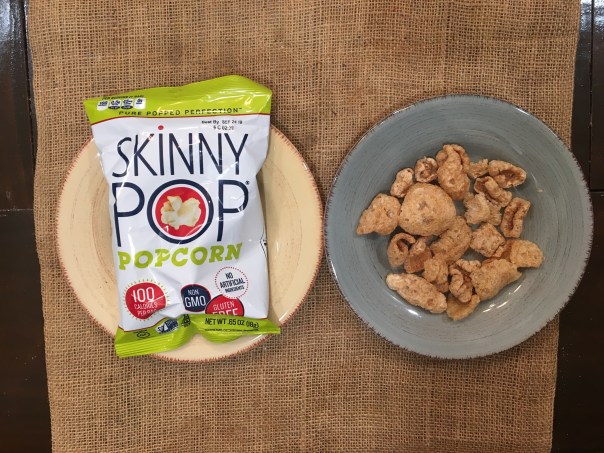
One is a serving of pork rinds, and the other is a bag of Skinny Pop popcorn.

That’s right, you read that correctly. Pork rinds have been an instrumental food in my weight loss success.

For me, they are an excellent snack food in moderation because they have no carbohydrates and no sugars.

Don’t get me wrong; pork rinds are by no means a health food. They are still deep-fried and high in cholesterol and fat.

If you ate nothing but pork rinds all day for every meal, I’m not sure you would lose weight at all, not to mention the adverse effects that an excessive amount of pork rinds could have on your cardiovascular health.

But for me, a single serving of pork rinds per day has become a staple in controlling those mid-afternoon cravings without raising my blood sugar.

Popcorn: The Original Snack Food

My second daily snack food is a bag of Skinny Pop popcorn.

I have always loved popcorn. But, for most of my life, I overindulged with popcorn just as much as I did everything else.

For many years, the evening snack I looked forward to the most was a giant punchbowl-sized bowl of steaming hot popcorn, popped fresh in my kitchen and heavily salted.

At the movies, I used to buy a gallon-sized bucket that could be refilled with popcorn for a year for a discounted price.

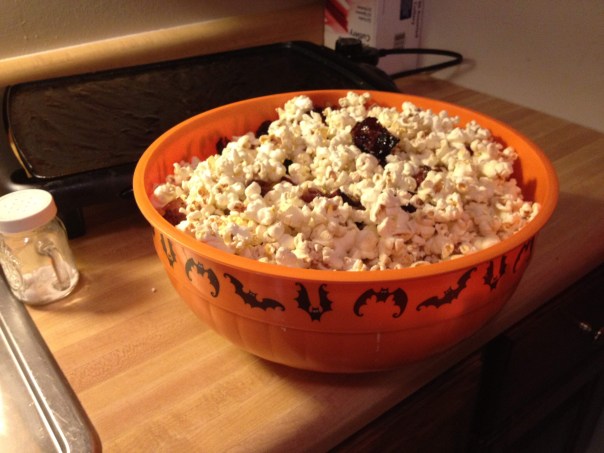
This is a concoction I created in grad school. Popcorn with caramelized bacon. I ate the entire thing. In fact, I ate a bowl of popcorn that size (sans bacon) almost every night until the day that I was diagnosed with diabetes.

My love affair with popcorn runs deep. So naturally, I was pleased to learn that I didn’t have to give it up completely after I turned my diet around.

One .65-ounce bag of Skinny Pop has 100 calories and, most importantly for me, only 9 grams of carbohydrates and 0 added sugars. It is popped in sunflower oil instead of corn oil. Like pork rinds, the key is moderation. If I were to eat that gallon bucket full of Skinny Pop as a snack, the health benefits would probably be entirely lost.

Reading the Labels

To achieve success with weight loss, I had to define snack time. Grazing constantly between meals negates all of the benefits that a healthy snack can add to your diet.

Telling myself that I will eat this particular thing at this particular time and that that will be the end of snack time also helped me to better discern when I was actually hungry and when I just felt like eating. Knowing the difference between those two sensations has made a major impact on my diet.

I also had to define what I was eating. It took me a long time to realize that the nutritional information labels were there to help me.

If I had paid attention to those labels the day that I sad-ate two dozen chocolate donuts in less than an hour, I would have known that I was putting 1,296 grams of carbs and sugars and 5,760 calories into my body at one time–after having already eaten two full meals with one more to go before bedtime.

That kind of eating isn’t just foolish. It’s dangerous. Thankfully my eyes were opened in time to turn those bad habits around.

Up Next…

What’s for dinner? In my next post, we’ll wrap up my Menu For Success series by looking at the last meal of the day. I’ll explain how I fired up the grill for dinner and cooked up some weight loss success.

Pork and popcorn: the other, other white meats.